
Judgment Assignment Steps Michigan 2026: Get 30-70% Cash Now
Learn the legal steps to assign your Michigan judgment in 2026 and get 30-70% cash upfront in 7-14 days. Avoid collection delays with our expert guide.
Great Lakes Strategic Capital
Great Lakes Strategic Capital

You won a civil judgment in Michigan, but collecting the money has turned into a slow, frustrating battle. Instead of waiting years for uncertain payment through enforcement, judgment assignment offers a faster path to immediate cash. This guide walks you through the legal steps to assign your judgment and unlock funds within days, not years.
Table of Contents
- Prerequisites Before Starting Judgment Assignment
- Core Steps for Judgment Assignment in Michigan
- Common Mistakes and Troubleshooting in Judgment Assignment
- Expected Results and Timeline for Judgment Assignment
- Comparison of Assignment and Collection Alternatives
- Get Immediate Cash for Your Michigan Judgment
- Frequently Asked Questions
Key Takeaways
| Point | Details |
|---|---|
| Speed Advantage | Judgment assignment converts judgments to cash in 7-14 days versus 1-3 years for traditional enforcement. |
| Payment Range | The upfront cash payment typically ranges from 30-70% of the judgment value, transferring the collection risk to the buyer. |
| Legal Requirements | A valid, enforceable judgment with proper notarization and county clerk filing is mandatory. |
| Documentation | Proof of creditor status and judgment ownership must be verified before the assignment process begins. |
Prerequisites Before Starting Judgment Assignment
Before you can assign your judgment, you need to meet specific legal requirements in Michigan. First, verify that your judgment is valid and enforceable under state law. Michigan judgments remain enforceable for 10 years and can be renewed for another decade. If your judgment is approaching expiration, you may need to file for renewal before assignment.
Gather all documentation proving you are the original judgment creditor or have lawful ownership through prior assignment. You will need the certified court judgment, docket information, and any supporting documents showing the defendant's name, case number, and award amount. Incomplete records can delay the process and may disqualify your judgment from purchase.
Michigan requires notarization of assignment documents to ensure authenticity. Locate a licensed notary public who can witness your signature on the Assignment of Judgment form. Some buyers provide assignment templates, but you must ensure the document complies with Michigan law and includes all required elements, such as judgment details, consideration amount, and assignee information.
Pro Tip: Request a judgment search at the county clerk’s office before starting the assignment process to confirm that no liens, appeals, or satisfied payment records exist that could invalidate your claim.
Finally, be prepared to disclose all collection attempts and communications with the defendant truthfully. Misrepresenting your judgment's status or withholding information about partial payments can void the assignment contract and expose you to legal liability. Transparency builds trust and speeds up the approval process.
Core Steps for Judgment Assignment in Michigan
Once you have verified that you meet the prerequisites, follow this step-by-step judgment assignment process to complete your assignment legally:
-
Confirm Judgment Eligibility: Review your judgment amount, debtor solvency, and enforceability status. Non-commercial civil judgments against individuals or small businesses are typically eligible. Commercial judgments, bankruptcies, or judgments against judgment-proof debtors may be declined.
-
Draft Assignment Document: Prepare an Assignment of Judgment that includes your name, the assignee's name, case number, court, judgment amount, and consideration paid. Use clear language stating that you transfer all rights, title, and interest in the judgment. Many firms provide standardized forms, but ensure yours meets Michigan statutory requirements.
-
Execute and Notarize: Sign the assignment document in the presence of a notary public. The notary will verify your identity, witness your signature, and affix their seal. Do not sign before meeting the notary, as pre-signed documents will be rejected. Some notarization services offer mobile options for your convenience.
-
File with County Clerk: Submit the notarized Assignment of Judgment to the county clerk's office where the original judgment was entered. Pay the filing fee, which varies by county but typically ranges from $20 to $50. The clerk will stamp and record the document in the official records.
-
Obtain Recorded Copy: Request certified copies of the recorded assignment from the clerk. This proof of filing protects both you and the assignee by creating a public record of the ownership transfer. Retain copies for your records and provide one to the assignee as confirmation.
Pro Tip: Complete steps 1-3 quickly but allow extra time for clerk filing, as some Michigan counties have multi-week backlogs during busy periods.
“Proper filing with the county clerk is the linchpin of a valid judgment assignment. Without it, the transfer is not legally recognized, and collection efforts by the assignee may be challenged.”
After filing, notify the judgment debtor of the assignment, as required by Michigan law. This notification informs the debtor to direct future payments to the new judgment owner. Failure to notify can complicate enforcement and create confusion if the debtor attempts to make payment to you instead of the assignee.

For personalized support, consider working with professionals who assign your judgment routinely and understand Michigan procedures inside and out. Their expertise reduces errors and accelerates the process. You can also explore resources in our judgment assignment guide to deepen your knowledge.
Common Mistakes and Troubleshooting in Judgment Assignment
Many judgment creditors encounter preventable errors that delay or invalidate assignments. Learn from these common judgment assignment mistakes to avoid setbacks:
-
Skipping Validity Checks: Assigning a judgment that has expired, has been satisfied, or has been discharged in bankruptcy wastes time and damages your credibility. Always verify the current status with the court before initiating the assignment.
-
Omitting Notarization: Michigan law mandates notarized signatures on assignment documents. Submitting an unnotarized form to the county clerk will result in immediate rejection and require resubmission with proper notarization.
-
Incorrect Filing Procedures: Filing the assignment in the wrong county or using outdated forms causes delays. Confirm the correct clerk's office location and obtain current forms from official court websites or your assignee.
-
No Recording Confirmation: Submitting the assignment but failing to obtain a recorded copy leaves the transfer unverified. Always request a certified copy showing the clerk's stamp and recording date.
-
Using Generic Templates: Assignment documents must comply with Michigan law and include specific judgment details. Generic online templates often omit required elements, leading to rejections. Use state-specific forms or templates provided by reputable judgment buyers.
If you discover an error after filing, contact the county clerk immediately to determine whether an amended assignment is needed. In some cases, you can file a correction affidavit. For major errors like incorrect judgment amounts or parties, you may need to void the assignment and start over. Prompt action minimizes complications and preserves your ability to assign the judgment successfully.
Expected Results and Timeline for Judgment Assignment
Understanding realistic outcomes helps you plan financially and compare assignment to alternative collection methods. Judgment assignment timeline and outcome expectations include:
-
Processing Speed: Most assignments complete within 7 to 14 business days from initial contact to cash payment, assuming all documents are in order and the judgment meets eligibility criteria.
-
Payment Amount: Buyers typically offer 30% to 70% of the judgment face value as an upfront lump sum. The percentage depends on factors like the judgment's age, the debtor's financial status, collectibility, and judgment amount.
-
Immediate Liquidity: You receive cash within days of finalizing the assignment, eliminating the uncertainty and expense of prolonged enforcement efforts that can stretch from 1 to 3 years with no guarantee of payment.
-
Risk Transfer: Once assigned, the buyer assumes all collection risk, legal costs, and enforcement activities. You are free from further involvement and protected from debtor counterclaims or collection complications.
| Factor | Traditional Enforcement | Judgment Assignment |
|---|---|---|
| Timeline | 1-3 years | 7-14 days |
| Upfront Cash | $0 | 30-70% of value |
| Collection Risk | Creditor bears all | Buyer assumes risk |
| Legal Costs | Ongoing fees | None after assignment |
| Effort Required | High | Minimal |
These results make assignment attractive for creditors who need immediate funds, lack resources for enforcement, or prefer certainty over the gamble of lengthy collection. While you receive less than full judgment value, you gain speed, simplicity, and peace of mind.
Comparison of Assignment and Collection Alternatives
Before deciding on assignment, weigh it against other judgment recovery alternatives to choose the best strategy for your situation:
Direct Enforcement: Pursuing collection yourself through wage garnishment, bank levies, or property liens offers the potential for full judgment recovery. However, enforcement takes 1 to 3 years on average and requires hiring attorneys, paying sheriff fees, and navigating complex procedures. Many debtors hide assets or file for bankruptcy, rendering enforcement efforts fruitless.
Collection Agencies: Hiring a collection agency transfers some effort to third parties, but agencies typically charge 25% to 50% of collected amounts as contingency fees. Success rates are low, especially for older judgments, and agencies have no financial incentive to pursue difficult cases aggressively.
Wage or Bank Garnishments: These tools can secure payment but require court filings, debtor disclosures, and employer cooperation. Garnishments take months to execute, and debtors often quit jobs or empty bank accounts to evade payment. Costs include court fees, service fees, and attorney time.
Judgment Assignment: This option provides immediate cash, transfers risk, and eliminates ongoing effort. You receive a discounted amount but gain certainty and liquidity. Assignment is ideal when you need funds quickly, lack enforcement resources, or face a judgment-proof debtor.
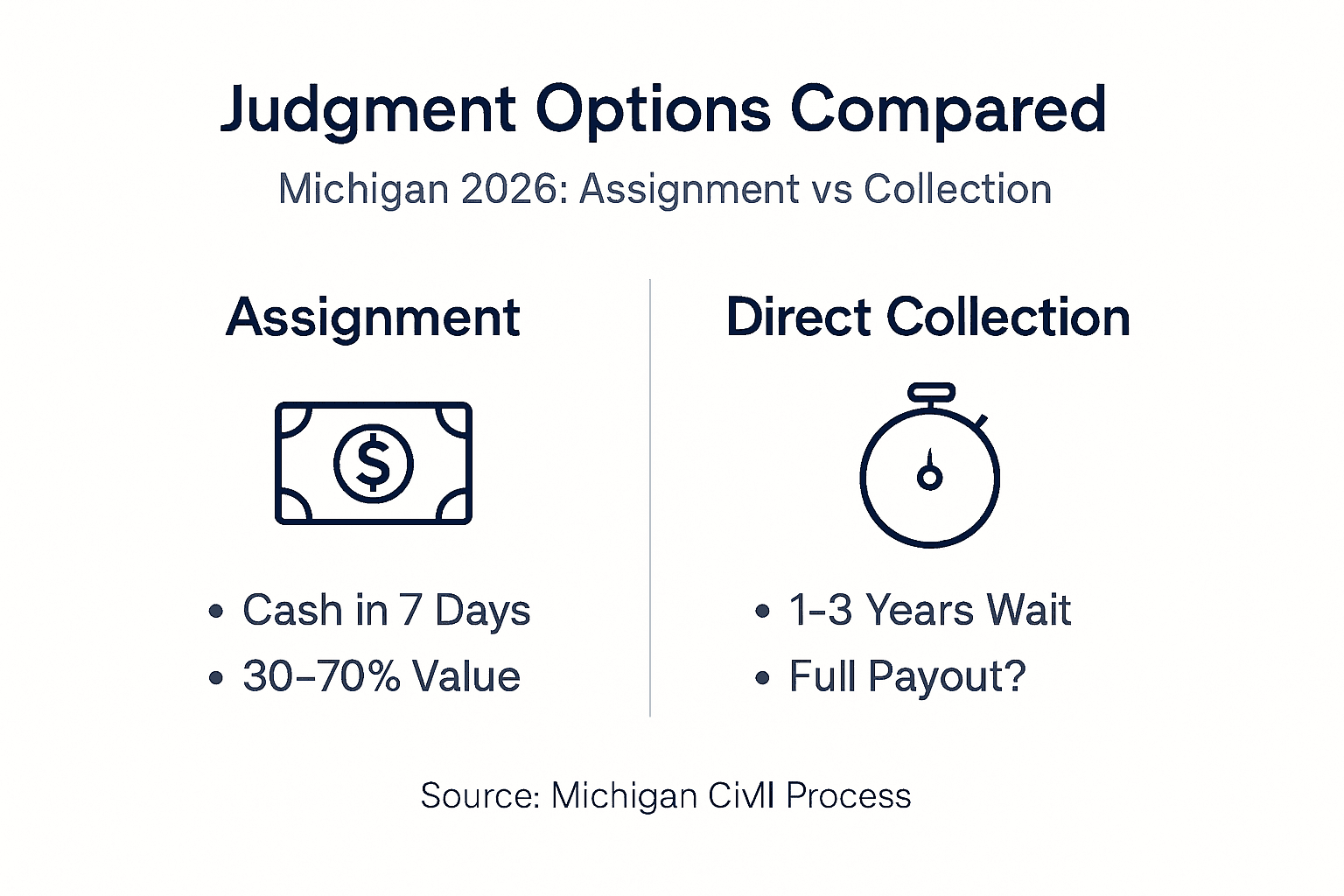
| Method | Speed | Typical Recovery | Risk Level | Cost |
|---|---|---|---|---|
| Direct Enforcement | 1-3 years | 0-100% | High | High |
| Collection Agency | 6-18 months | 0-50% | Medium | 25-50% |
| Garnishment | 3-12 months | 0-100% | Medium | Medium |
| Judgment Assignment | 7-14 days | 30-70% | None | None |
Assignment excels when speed and certainty outweigh maximizing recovery. If your debtor has stable income and assets, enforcement may yield more. If the debtor is elusive or judgment-proof, assignment provides the only realistic path to cash.
Get Immediate Cash for Your Michigan Judgment
If waiting years for uncertain payment does not fit your financial needs, judgment assignment offers a practical alternative. Great Lakes Strategic Capital specializes in purchasing Michigan civil judgments, providing upfront cash within days and handling all enforcement complexities.
We offer transparent pricing, professional guidance through the judgment assignment process, and support with legal documentation. Our experience with Michigan courts ensures smooth filing and compliance. You avoid the stress, expense, and risk of prolonged collection efforts while gaining immediate liquidity.

Ready to convert your judgment into cash? Sell your judgment now and receive a free evaluation within 24 hours. Explore our resources to learn more about judgment assignments and discover why Michigan creditors trust us to deliver fast, fair outcomes.
Frequently Asked Questions
What documents prove judgment ownership?
You need the certified court judgment, case docket sheet, and any prior assignment documents if you acquired the judgment from another party. The county clerk can provide certified copies if you lost the originals.
Is notarization always required for judgment assignment?
Yes, Michigan law requires notarization to verify the authenticity of the creditor's signature on the Assignment of Judgment. Without notarization, the county clerk will reject the filing.
How soon can I get cash after assignment?
Most buyers issue payment within 7 to 14 business days after verifying judgment eligibility, executing the assignment document, and filing with the county clerk. Some expedited services offer faster turnaround.
Can I assign a judgment that is about to expire?
You may need to renew the judgment before assignment if it is close to the 10-year expiration. Buyers typically require at least one year of remaining enforceability. Consult the county clerk about renewal procedures.
What happens if I don’t file the assignment with the county clerk?
Without official filing, the assignment is not legally recognized in Michigan. The buyer cannot enforce the judgment, and you may remain liable for the debt. Filing creates a public record that protects both parties and enables legal collection.
Recommended
Weighing your options in Michigan? Compare enforcing a judgment yourself versus selling it for cash, or read our full Michigan judgment recovery guide.

Wayne S. Bisard
Wayne S. Bisard is the owner of Great Lakes Strategic Capital, a U.S. Marine Corps veteran with 31+ years of investigative experience, and President of the Michigan Council of Professional Investigators.
More about WayneSee what your Michigan judgment is worth — free evaluation
No upfront fees. No collection hassle. Get a cash offer instead of waiting years.


